
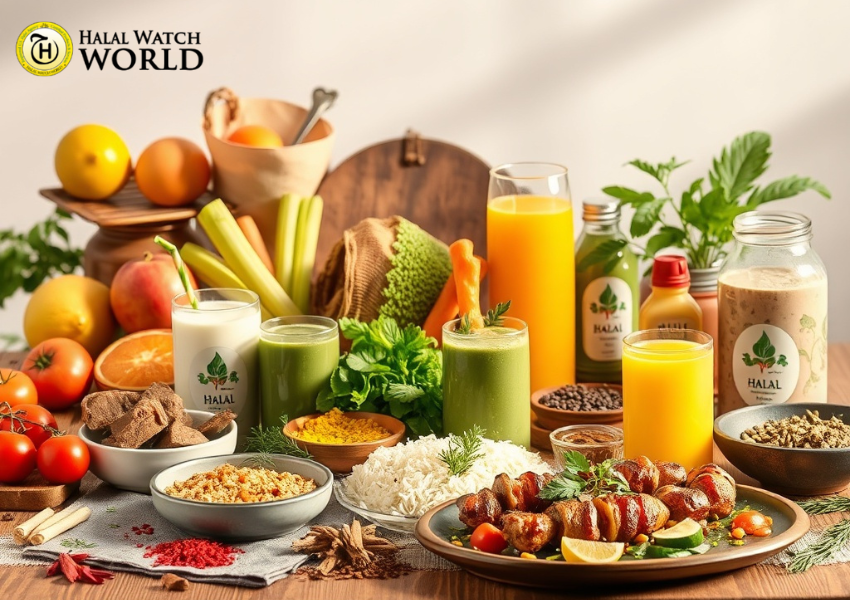
Scaling Your Halal Food Business: A Provider’s Guide to Logistics and Distribution in the USA
The American Halal food market is experiencing explosive growth, projected to surpass $458 billion by 2034. This expansion, driven by a growing Muslim population and an increasing consumer interest in ethical, safe, and transparent food sourcing, presents a monumental opportunity for food providers. However, scaling your business to meet this demand isn’t just about production; it’s about mastering the journey of your product—from the farm to the consumer’s plate.
In the complex and highly regulated U.S. landscape, logistics and distribution are the defining factors between a successful, scalable Halal brand and one that remains confined to a niche market. This guide breaks down the critical steps to achieving robust, reliable, and compliant distribution across the United States.
Phase 1: Halal Integrity as the Foundation
The core challenge in Halal food distribution is maintaining Halal integrity—the religious purity of the product—at every stage of the supply chain. This extends far beyond the slaughterhouse to processing, transportation, storage, and retail display.
The Crucial Role of Certification
For a Halal food provider, certification is not an option; it is the absolute cost of entry into the mainstream market. It serves as a guarantee to the consumer that the food standards halal certification requires have been rigorously met.
Many providers mistakenly search for cheap halal certification USA options, only to realize that true credibility and international recognition come with a thorough, auditable process. The value of certification lies in the access it provides to major retail chains, which require irrefutable proof of compliance. This is where professional guidance becomes essential. Engaging a service offering halal certification consulting can streamline the complex application process, helping you navigate the varying standards and audit requirements set by different Islamic bodies.
Navigating the Requirements
The foundation of a successful Halal supply chain starts with understanding the strict halal food certification requirements for your specific products. This includes ensuring zero cross-contamination with Haram (forbidden) products, especially pork derivatives, alcohol, and meat not prepared according to Zabiha principles.
For businesses looking to enter the global marketplace, a separate consideration is securing an international halal certification USA accepted by major trading partners like those in the Gulf Cooperation Council (GCC) and Southeast Asia. The halal certification price in USA varies significantly based on factors like the number of products, the complexity of the manufacturing site, and the recognition level of the certifying body. This upfront investment is minimal when compared to the revenue opportunity of accessing national and global markets.
Phase 2: Mastering the Logistics Chain
The physical movement and storage of Halal products demand meticulous planning and dedicated infrastructure. The U.S. distribution system is vast, relying heavily on a sophisticated network of cold storage and transportation that must be managed with Halal compliance in mind.
1. Segregated Storage and Warehousing
Cross-contamination is the single biggest threat to Halal integrity during logistics. Therefore, segregation is paramount.
- Dedicated Cold Chain: For perishable items (meat, dairy, prepared meals), dedicated refrigerated and frozen storage facilities are ideal. If co-mingling is unavoidable, there must be absolute physical separation using distinct racking, demarcated zones, and segregated handling equipment (forklifts, pallets).
- Traceability Systems: You must implement a robust traceability system capable of documenting the Halal status of a product from the moment of ingredient sourcing to the final distribution center. Modern solutions utilizing QR codes or blockchain technology are becoming industry standards to guarantee the integrity of halal certificate for food products and combat food fraud.
2. Transportation and Fleet Management
The challenge of distribution across a country as large as the U.S. lies in the ‘last mile’ of the supply chain.
- Dedicated or Cleansed Fleets: While dedicated Halal transport fleets are rare and expensive, most providers opt for cleansed-and-certified transportation. This involves a documented, deep-cleaning protocol for trucks and containers to remove all Haram residue before loading Halal products.
- Temperature Monitoring: Halal chilled and frozen products often fall into the highest-value category. Continuous temperature logging throughout the transit is non-negotiable, protecting both the product’s Halal status and its quality.
3. Distribution Channels: Go Mainstream
To truly scale, Halal products must move beyond specialty ethnic stores and into mainstream retail. Supermarkets and hypermarkets (like Walmart, Kroger, and Costco) now account for the largest share of the Halal food market in the U.S.
- Retail Partnerships: Building relationships with national distributors and large food service providers is essential. These partners must understand and agree to uphold your specific Halal storage and handling requirements. Your Halal Assurance System (HAS) documentation becomes the contract that binds these partners to your compliance standards.
- E-Commerce and Direct-to-Consumer: The rise of e-commerce is a game-changer, especially for reaching Muslim consumers in rural areas where physical Halal markets are scarce. This channel demands reliable, insulated shipping and rapid delivery services to maintain the cold chain.
Phase 3: Long-Term Compliance and Quality Assurance
Scalability is sustained not just by logistics, but by a commitment to perpetual quality assurance. The Halal sector is constantly evolving, with new food technologies and ingredient sources emerging, requiring providers to remain vigilant.
Continuous auditing and monitoring of all supply chain partners, from ingredient suppliers to 3PL (Third-Party Logistics) providers, are crucial to maintaining the Halal integrity of your brand. Furthermore, as demand drives new product lines, from plant-based Halal to specialty snacks, the process for obtaining halal food certification services USA should be an ongoing partnership, not a one-time transaction.
To ensure your processes are robust and your Halal certifications hold up to both domestic and international scrutiny, resources like Halal Watch World are invaluable for staying informed on changing global Halal standards, new certification protocols, and addressing industry challenges like standardization and food fraud.
Conclusion: The Future of Halal in America
The future of the Halal food business in the USA is bright, presenting a significant opportunity for providers willing to invest in a compliant, transparent, and efficient supply chain. By viewing Halal certification not as a burden, but as a framework for quality assurance, and by strategically planning your logistics for segregation and traceability, your brand can confidently scale across the nation.
Mastering the distribution journey ensures that you are not just selling food, but delivering trust and integrity to a rapidly growing, discerning, and brand-loyal consumer base.